
Acts of Association and Family
Thomas Day's Acts of Association
Thomas Day was highly skilled in both the arts of cabinet making and networking. The quality of his work allowed him to forge powerful connections with state level politicians, who became regular clients and enabled him to further his business. This and his enslavement of others earned him special treatment compared to other people of color and once allowed him an exception to state law.
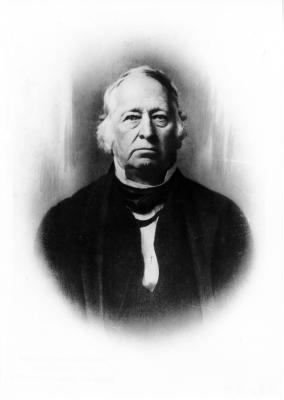
Day married Aquilla Wilson of Halifax County, Virginia in January 1830, but faced an immediate obstacle. An 1826 law banned free people of color from entering the state, meaning Aquilla, a woman of color herself, could not join her new husband in North Carolina. Leveraging his good reputation, Day persuaded 62 white neighbors to lobby the legislature to make an exception on his new family’s behalf. Some of the neighbors were legislators themselves, and Attorney General Romulus Saunders also sent an affidavit vouching for Thomas Day. Saunders’ affidavit specifically noted Day’s enslavement of others as a reason for his being worth of the exception to the 1826 law. This support allowed a bill to pass granting Aquilla legal residence in North Carolina, and the Days were reunited.
Despite his seeming acceptance of slaveholding society, however, Day was leading a double life. In 1835 Thomas Day, an enslaver of other people of color, traveled to Philadelphia to attend a “Colored People’s Convention” frequented by abolitionists. There he attended speeches on abolitionist topics and stayed in a boardinghouse with several other abolitionists. Among these was John Francis Cook, a Presbyterian minister from Washington D.C. The two men apparently became longtime friends, as Cook records a visit from Day and two of his children in his diary in May 1850.
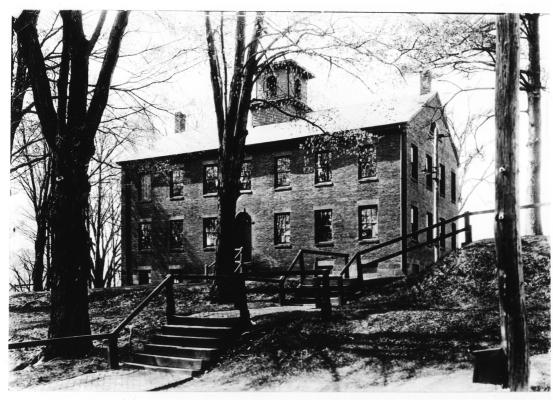
At the time of his visit to Washington D.C., Day was likely escorting his children home from Wesleyan Academy boarding school in Wilbraham, Massachusetts. The school at the time was run by known abolitionists and attended by all three of Day’s children from 1849-1852. Day apparently also befriended some of the faculty since he mentioned them warmly in letters to his daughter Mary Ann.
Thomas Day’s abolitionist leanings would have been kept secret, and for good reasons. State law and social norms strictly banned abolitionist activity among people of any race, with penalties including jail time or worse. In August 1835, just months after Day’s travel to the “Colored People’s Convention” mentioned the hanging of a northern abolitionist in Milton. He was later cut down, resuscitated, and put in jail. The article ended with a chilling message to abolitionists, stating “if they interfere with our property, we shall certainly interfere with their persons.” A week later an anti-abolitionist vigilante group also formed in Milton to take further take matters into their own hands if “the public safety demands a more summary course.” With his two-year-old son, two newborn children, wife, and aging mother living with him, the stakes for Thomas Day to maintain secrecy were high.
Day’s work enabled him to overcome many social barriers, but not all. Even as enslavers, the Day family faced increasing restrictions. Over the next several decades, Black North Carolinians could not:
- Sell goods outside their own county without a court-issued license (1831)
- Teach or preach in public (1831)
- Vote (1835)
- Sell spirituous liquors (1844)
- Remain in-state upon acquiring freedom if previously enslaved (1854)
Penalties for breaking these laws included hefty fines and/or “servitude.” By the outbreak of the Civil War, Thomas Day and other free people of color were free in name only.
Thomas Day's Family and Home, 1861-1871
Despite mounting discrimination and legal restrictions, Thomas and Aquilla Day built a family and lived comfortably as a successful merchant family. They had three children: Devereaux (b.1833), Thomas Jr. (1835), and Mary Ann (1835). Day trained his two sons in cabinetmaking and raised his daughter to flourish in polite society. He also had high expectations, with letters to Mary Ann constantly pushing them to save their money, avoid bad habits like drinking and gambling, and cultivate useful skills so they can live better lives than he could.
The children mostly lived up to their father’s expectations of living more freely than their father and helping others to do the same. Devereaux disappears from known records during his time at Wesleyan Academy. Thomas Jr., however, took over his father’s business with community assistance in 1860 and successfully settled his debt in 1864. The following decades saw a flurry of social activism from both children. After moving to Wilmington with Aquilla in 1864, Mary Ann and Thomas Jr. helped run an underground school for Black children. After the Civil War, Mary Ann married Rev. James A. Chresfield and worked with him as a teacher for the Freedmen’s Bureau in Lexington and Greensboro. Mary Ann unfortunately died of unknown causes in 1870, but her husband continued their work.
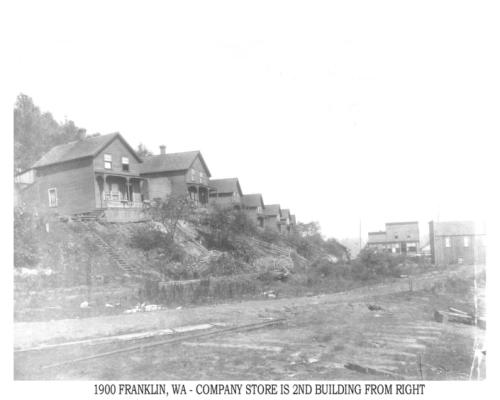
After selling Union Tavern in 1871 Thomas Jr. worked on and off as a cabinet maker over the decades. He also pursued social activism of his own. He married three times, the second time to Annie Washington, co-founder of the Contraband Relief Association during the Civil War. After moving to Washington state with his third wife, he served as a member of the local school board and “Colored Republicans” club until his tragic death in 1895.
Thomas Day’s descendants also continued the work he began. His granddaughter Annie Day Shepard became a founding mother of North Carolina Central University in 1910. Other Day descendants have worked as educators, businesspeople, doctors, and cabinet makers. Ultimately, while Thomas Day did not live to see the fruit of his work to make a better world, his efforts were not for nothing.